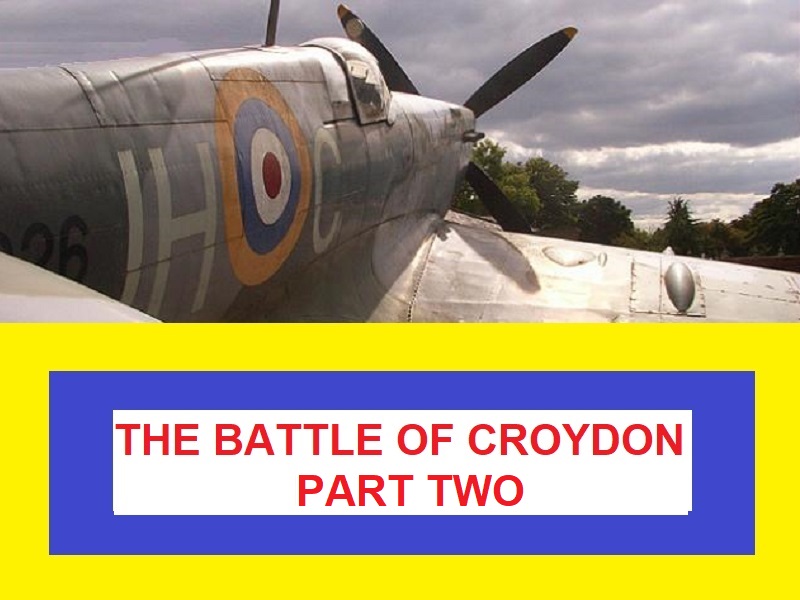
Frank Molloy tells the story of the first major WWII bombing raid on Greater London, and asks if it really was a case of mistaken identity, as historically maintained. Part 2 of 3.
At about 6:25pm, on August 15th 1940, a massive build-up of 200 German aircraft was reported approaching the Kent coast. Hurricanes and Spitfires from an assortment of RAF squadrons were scrambled to deal with the latest Luftwaffe threat, and they engaged between Dover and Folkestone. As the incoming raid was intercepted, the huge mass broke up into multiple distinct formations. Two groups of around 60 German bombers with fighter escort were detected heading north-west near Romney. The lead was made up of about 40 Dorniers. Following in their path was the very last of the formations tagged as ‘raid eight’ by RAF Fighter Command. This flight was made up of over three-quarters of the entire 210 Group. Led by Commander Walter Rubensdörffer, they had taken off from the Marck aerodrome to the east of Calais barely ten minutes earlier.
Both formations looked to be heading straight towards RAF Biggin Hill, but it appears that as the initial force of Dorniers flew over Staplehurst, they were engaged by Spitfires from Biggin Hill’s 610 Squadron. When challenged, the Dorniers almost purposefully diverted to attack RAF West Malling ten miles to the north-east. After this, they were harried back to the coast by the Spitfires of 54 Squadron which had flown in from the distant pockmarked airfield of Manston, 40 miles away.
Meanwhile, the 14 Bf110’s and eight Bf109’s of 210 Group with their fighter escort above, continued on their original north-westerly path, hugging the lowland east of the High Weald. As they reached its northern limit, about 15 miles from their reputed target of Kenley Airfield, they suddenly veered northwards over Sevenoaks. They began climbing to an altitude of about 9,000 feet, taking them to Bexleyheath about 15 miles further to the north, roughly 50 miles from where they had flown in over the Kent coast. In the process they apparently lost their main fighter escort. Then the 22-strong bomber wing turned sharp south-west to initiate a bombing run.
As the evening summer sun bathed the south London suburbs in an almost ethereal light, Rubensdörffer was heard to comment over the radio: “Are we over land or sea?” His next words were more ominous: “I’m going in”. But what was his target? At around 6:50pm, the answer was becoming clear: Croydon. Eyewitnesses first reported seeing about 20 aircraft beginning to dive from about three miles away. Very soon the raiders were seen sweeping down over the south Croydon area.

At about the same time, RAF Kenley Command ordered nine Hurricanes of Croydon’s own 111 Squadron to be vectored towards their base. Only an hour earlier they had been in combat 50 miles away over the Sussex and Hampshire coastline. They had landed back at Croydon, refuelled, and luckily taken off just minutes before the attack on their own home. They were ordered to patrol the western boundaries of the airfield. Unfortunately, 210 Group had already begun their bombing run from the north-east. From about 1,000ft they unleashed a mass of bombs on the undefended airfield and surrounding industrial buildings, while strafing all and sundry with their cannon and machine guns.

111 Squadron eventually got busy with the bombers. They were joined by a further nine Hurricanes of 32 Squadron who had just returned from combat alongside them in Hampshire. Likewise, they had only just touched down at their Biggin Hill base when they were scrambled once again. Against the setting sun in the western sky, they could see huge plumes of black smoke not six miles distant. With a top speed of 330mph, they were there in no time.
On seeing the RAF response, the German bombers realised they were sitting ducks without fighter escort. They immediately formed a defensive ring (abwehrkreis). This tactic relied on the mutual protection of the plane directly in front or behind. The circle also presented a focal point to try to entice and trap the enemy. From above, the Hurricanes hungrily eyed their prey. But this far from home, with fuel running low, 210 Group weren’t prepared to hang around for too long. They realised their only chance of survival would be to cut and run.
Rubensdörffer himself led the break. It was the moment the RAF had been waiting for. They moved in for the kill, and pandemonium broke out. The two sides engaged, and a vicious aerial battle was fought in the skies over Croydon. Hurricanes and Messerschmitt’s swooped high and low, at one point taking the tiles off a rooftop. It was reported that one RAF pilot plunged his aircraft into the evening traffic of south Croydon, but there is no confirmation of casualties here. Another pilot chased the tail of a Bf109 at low level practically through the streets of Purley, with bullets striking the roofs of houses. One resident claimed she was machine-gunned as she ran for the shelter in terror.
The suburb’s houses trembled from the explosions. A pub landlord said his establishment “shook like jelly”. Walls were blasted, roofs were lifted and windows were shattered. It caused some panic among the civilian population, but also excitement. Passengers on the top deck of buses had a grandstand view. An eyewitness revealed, “As we were going along, we saw two or three dozen planes high up. Suddenly we heard the rattle of machine guns and anti-aircraft fire. Three German machines appeared to be shot down, a group of soldiers cheered each time a raider crashed.” Meanwhile, those travelling on a 194 bus from Croydon Airport to Forest Hill had a lucky escape. A bomb dropped only a few yards ahead and it pitched into the crater. Passengers were injured by flying glass as all the windows were blown. The dramatic image of its wreckage made the following day’s newspapers.
Many of the town’s children had been evacuated just before war was declared. But you can imagine those that had stayed behind watching dumbstruck from their front gardens. Then, having been reprimanded to “come inside” by the parents, bolting upstairs to watch from bedroom windows. According to one newspaper report: “Everyone seemed to treat it as a great thrill not to be missed and the children were laughing and excitedly pointing out to each other the various incidents.”
The battle was watched by thousands of people from London’s high ground. Distinct gunfire could be heard as far away as Wandsworth and the impact of the bombing at Westminster and Woolwich. Thick black clouds of smoke hung over south London. Eyewitnesses say the entire action of the raid was about 35 minutes.
As 210 Group attempted to makes its escape, the nimbler Bf109s left the straggling Bf110s behind to the mercy of the marauding RAF squadrons. 111 Squadron leader Johnny Thompson led four Hurricanes against a chain of three Bf110s. In a burst of machine gun fire over Croydon, the central Bf110 flown by Rubensdörffer was hit. The chain split, and Rubensdörffer fought a desperate battle to control his damaged plane. As his ailing Bf110 headed south-west, he relied on a chaperone for protection, an Bf109 escort flown by Lieutenant Horst Marx.
The most direct route back for the Luftwaffe meant squeezing through the five-mile-wide corridor separating RAF Kenley and RAF Biggin Hill. Hurricanes and Spitfires from other squadrons joined the hunt. This was more than 210 Group had bargained for and they were harried through the skies of Kent, Surrey and Sussex. Rubensdörffer was soon attacked by another Hurricane, this time evidently flown by pilot officer Duckenfield of Gravesend’s 501 Squadron. Coming out of nowhere, his bullets ripped into the Bf110. The fuel tanks ruptured and the fuselage caught fire just as it flew over Winston Churchill’s home at Chartwell. Over the radio, Rubensdörffer told Marx he was wounded and that his fellow crewman was either dead or unconscious. Having lost control, he said he would attempt a crash-landing. Marx pulled away leaving the commander to his fate.
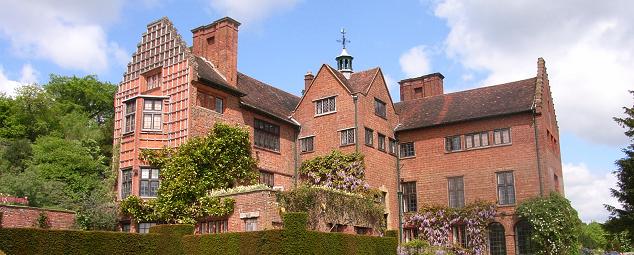
On a balmy summer’s evening, the villagers of Rotherfield in Sussex cocked their ears to the scream of an engine which seemed to coming from the direction of Crowborough. The sound increased in pitch and volume, and suddenly they watched in awe as a huge flaming chunk of metal roared in from the west, just clearing the spire of St Denys Church. A few moments later they heard a loud explosion. At Catts Hill, to the east of the village, they saw that a German Messerschmidt Bf110 fighter-bomber had crashed headfirst into a line of trees at a local farm. It had been over English soil for barely an hour and covered a total distance of just 90 miles.
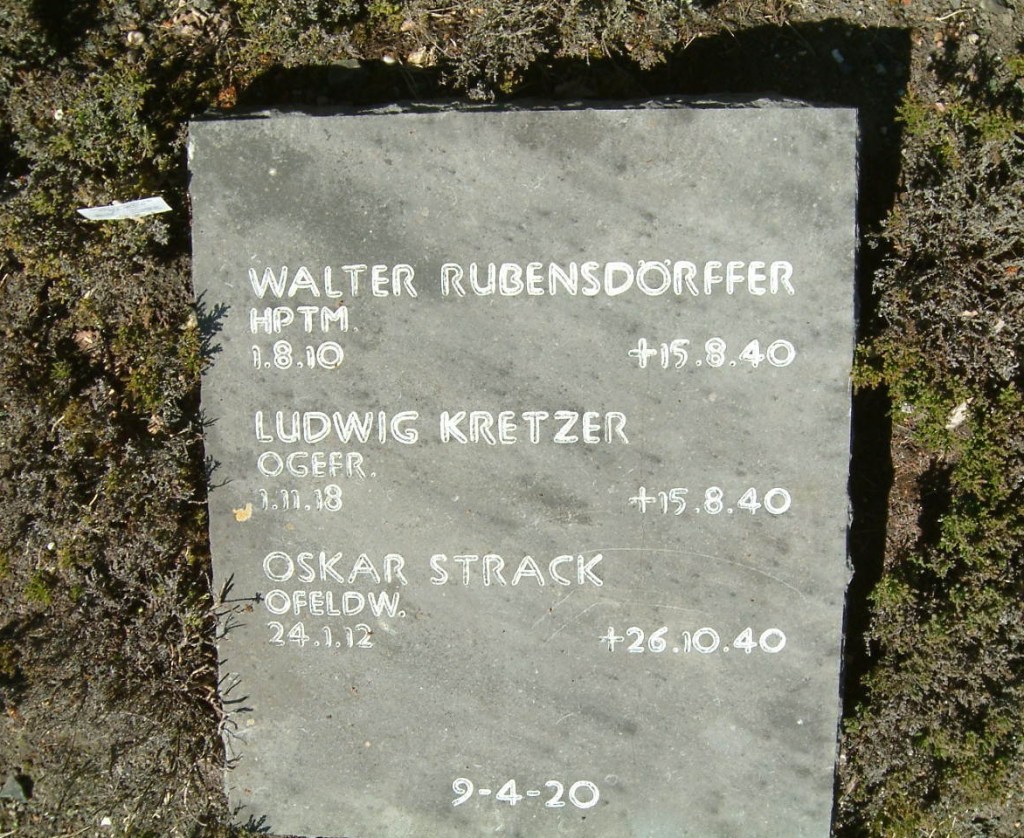
The crew were dead. In the pocket of Walter Rubensdörffer’s tattered uniform was found a telegram from Luftwaffe General Kesselring, congratulating on his Iron Cross, which he had received for courageous leadership. Four days later, he would be awarded another medal posthumously, the German Knight’s Cross. Rubensdörffer and his co-flying corporal Ludwig Kretzer were buried at Tunbridge Wells before being reinterred at the German Military Cemetery at Cannock Chase, Staffordshire.
Meanwhile, four miles away in Frant, Lieutenant Marx’s Messerschmitt 109 was brought down by another Hurricane. Marx managed to bail out but parachuted into the arms of the local police. Five more Bf110s of 210 Group were brought down at Hawkhurst, Hooe, Horley, Ightham and Nutfield. The surviving aircraft were still being hounded by 151 Squadron as they made their way across the channel. In all, a quarter of the entire 210 wing were lost in this one mission. It was a major disaster for the group, made more acute by the loss of its founding commander.
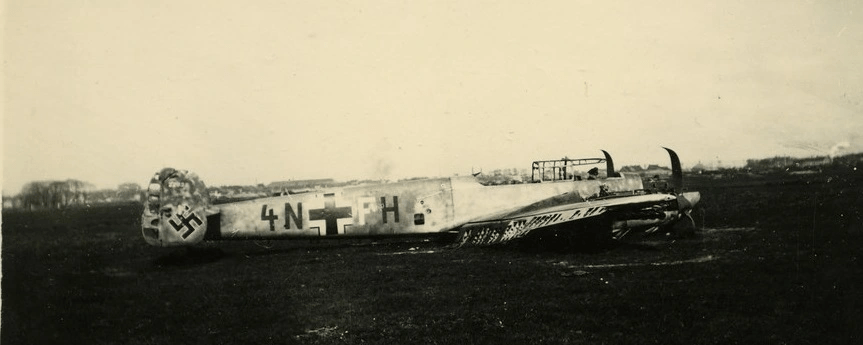
Rubensdörffer’s legacy back at Croydon Airport was a scene of utter carnage. Hangars, workshops and terminal buildings were ablaze. The control tower and armoury were destroyed, the officers’ mess was wrecked, and about forty training aircraft went up in flames. The airfield was heavily pockmarked and the station was effectively put out of action. There were 280 RAF personnel casualties, including six dead. It was also later reported that the 111 Squadron mascot, a bull terrier called ‘Gangster’, lost a leg and had to be put down.
But it was on the outskirts of the airfield where the human toll was highest, mainly in the factories and component engineering works near the aerodrome. Mercifully, most of the workers had clocked off for the day. Yet the attack claimed the lives of 62 civilians with 185 injured. In all probability, the number of deaths was even higher, going by the records from local hospitals and cemeteries. But then, the official casualty list was never published.
So ended ‘The Battle of Croydon’ as dubbed by the RAF pilots that fought in it. The town had already been cursed as the first Greater London district to garner Luftwaffe attention when a payload of bombs was dropped on its Addington suburb on June 6th 1940. Now it was the victim of the first major bombing raid on the metropolitan area.
Londoners were shocked. It suddenly brought home the seriousness of the situation. Up to this point they’d escaped relatively unscathed. The next day, sightseers came from all over the capital to see the damage caused by the great raid. Newspapers described it as something like a bank holiday scene, claiming crowds of up to 100,000. Car parks overfilled with incoming traffic and mounted police had to be called in to keep order.
There were some recriminations in the aftermath. Although the airfield had been pre-warned of an imminent attack, farcically, the public air-raid sirens were not sounded until it was almost over. This failure later led to a hastily arranged inquiry at Croydon Town Hall chaired by Home Secretary Sir John Anderson. An argument ensued as to whether sounding the air raid warning was a military or local authority responsibility. Such was the row, that Sir John subsequently had to make a statement in the House of Commons. Here, he acknowledged it was the responsibility of Fighter Command to sound the alarm, but absolved them of any blame because of the particular circumstances of the surprise raid.
He also had to address the charge that when the alarm was finally sounded, it appeared pointless and almost comical, causing one MP to raise concerns that it created ‘a bad effect’. In reply, Sir John claimed that the late public warning was given, “not as the result of bombs having fallen in Croydon, but because this enemy formation had changed its direction and was flying on a course which suggested that it might after all deliver an attack on the Metropolitan area”. Put plainly and simply, this was never the case, and it appears a poorly advised response. Not only was he crediting the Luftwaffe with hitherto unknown super powers of range and payload, he was also admitting that that no alarm was raised for the Croydon raid whatsoever.
Over the next few days, Croydon was bombed again, as were the adjacent boroughs of Sutton and Merton, with Beddington, Carshalton, Mitcham and Wimbledon suffering in particular. Why these areas were targeted remains unclear. They were of little strategic value. One logistical answer is that a formation of German bombers heading for Croydon from the south-east was forced to overfly the airport by defending RAF squadrons, then ditched their fuel-sapping payload a couple of miles north-west before turning south to return to base.
But it was Croydon that continued to take the brunt of the Luftwaffe attacks, with its subsequent toll on civilian life. Before the end of the month, there were a further six major raids on the town, including another attack by 210 Group on August 31st. This time they managed to retain their fighter escort. Then again, they had flown in on a direct and detectable route. Prior warning had been given and the damage was minimal. Clearly on this occasion, 210 Group lacked the element of surprise.
Nevertheless, the combined toll on the town was heavy. In the two-week period Aug 16th to 31st, Croydon suffered a further 311 casualties, including 40 dead. Indeed, by the time the Blitz on London had officially started on September 7th 1940, Croydon had suffered more combined civilian casualties and deaths (621) than any other city or town in the UK. A blitz before the Blitz.
| German aerial attacks Jun 18-Sep 7 1940 (pre-‘Blitz’). Top 10 UK civilian casualty sites: city/town (+strategic target) | Casualties | Deaths |
| Croydon (airport and aviation industry) | 514 | 107 |
| Portsmouth & Gosport (Navy and submarine bases) | 479 | 127 |
| Weybridge (Vickers-Armstrong factory) | 341 | 47 |
| Luton (Vauxhall plant) | 332 | 66 |
| Merton | 328 | 72 |
| Liverpool/Merseyside (docks) | 317 | 55 |
| Birmingham (industrial plants) | 219 | 66 |
| Swansea (docks) | 181 | 56 |
| Chatham & Gillingham (docks) | 120 | 30 |
| Aberdeen (docks) | 107 | 27 |
| Entire Greater London area (not inc Croydon or Merton) | 716 | 55 |
| Note: Newcastle, Norwich, Plymouth and Ramsgate recorded casualties just below Aberdeen. |

From a wider military perspective, August 15th turned out to be major success for the RAF in the Battle of Britain. Despite losing 34 aircraft, they had (just) managed to hang on. Meanwhile, the Luftwaffe disastrously lost 76 planes, mainly as a result of their raids on the north-east, the south coast and Croydon. The RAF nicknamed August 15th ‘The Greatest Day’. The Luftwaffe referred to it as ‘Black Thursday’. Winston Churchill did not see the dramatic dogfight in the skies above his beloved Chartwell home that evening. Much as he would have surely enjoyed the spectacle. Instead, he had spent the day in Fighter Command HQ at RAF Bentley Priory. The following day, as he was being driven to Chequers, he uttered for the first time the phrase: “Never was so much owed by so many to so few.” In Croydon, ‘so many’ would never hear those famous stirring words. But in the wider context of World War II history, the Battle of Croydon was over. The Battle of London was about to begin.

 YOUR LONDON WALKS
test
LikeLike